
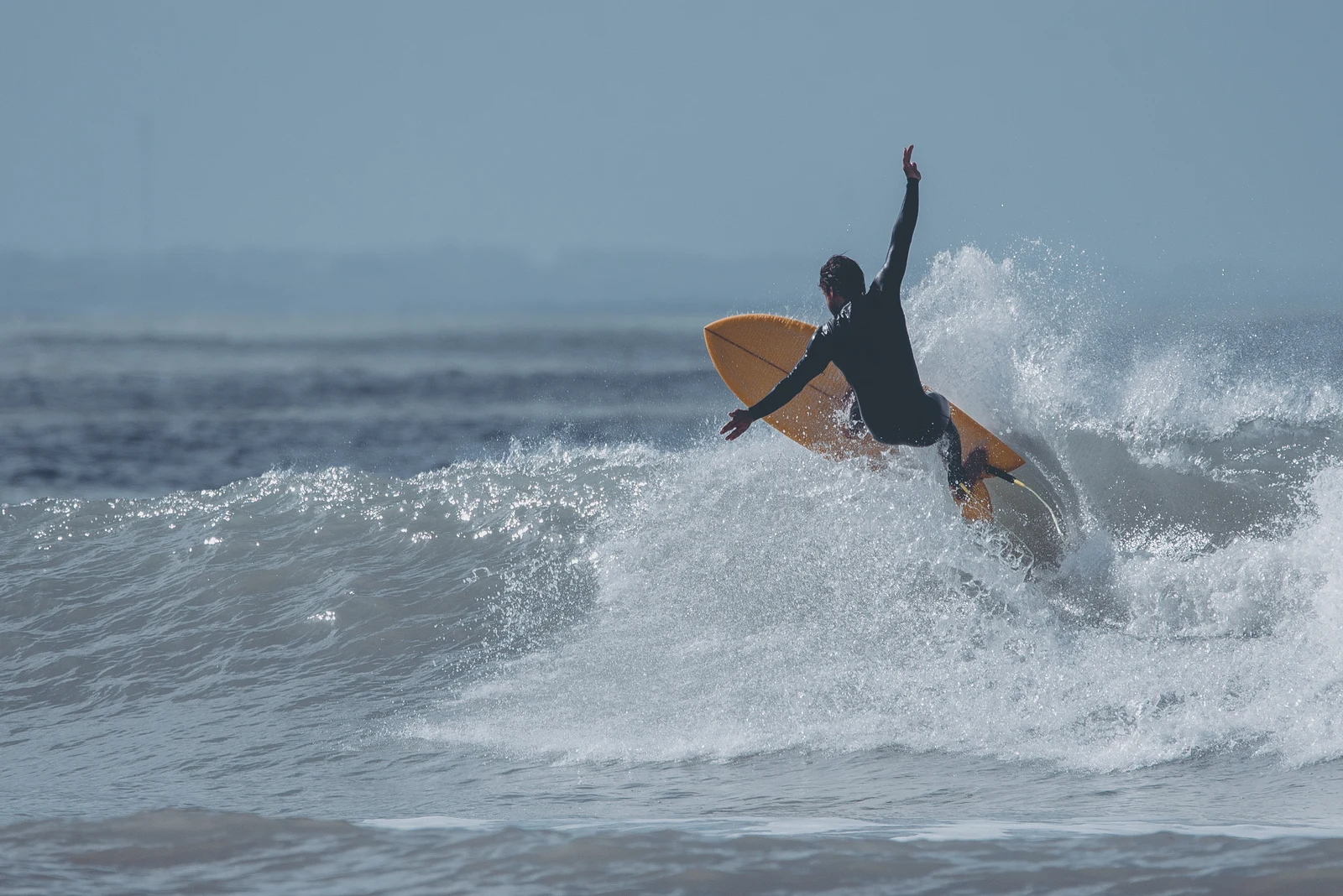
A fish is worth considering if you catch the wave comfortably but lose speed when the face flattens. That’s where I’d look for the difference: can you keep moving towards the next section without having to pump the whole way?
Start with the waves you actually surf and the board you ride now. Getting into the wave earlier and carrying speed once you’re up are two different jobs. Which one would make the bigger difference to your usual surf?
Where a fish helps
Think about the moment you come off a turn and the face goes soft. A broad outline gives the board more area to run on, which can help it keep moving when the wave has less push. A low rocker, meaning less curve from nose to tail, also helps it glide.
I kept The Fish wide through the middle, put foam forward and gave it a low rocker. I’d look at it for small beachbreaks and mellow points, roughly 1 to 4 ft, if you want to carry speed and draw longer turns. The size of the wave is only part of it. A soft shoulder and a steep pocket ask different things of a board.
What the swallow tail changes
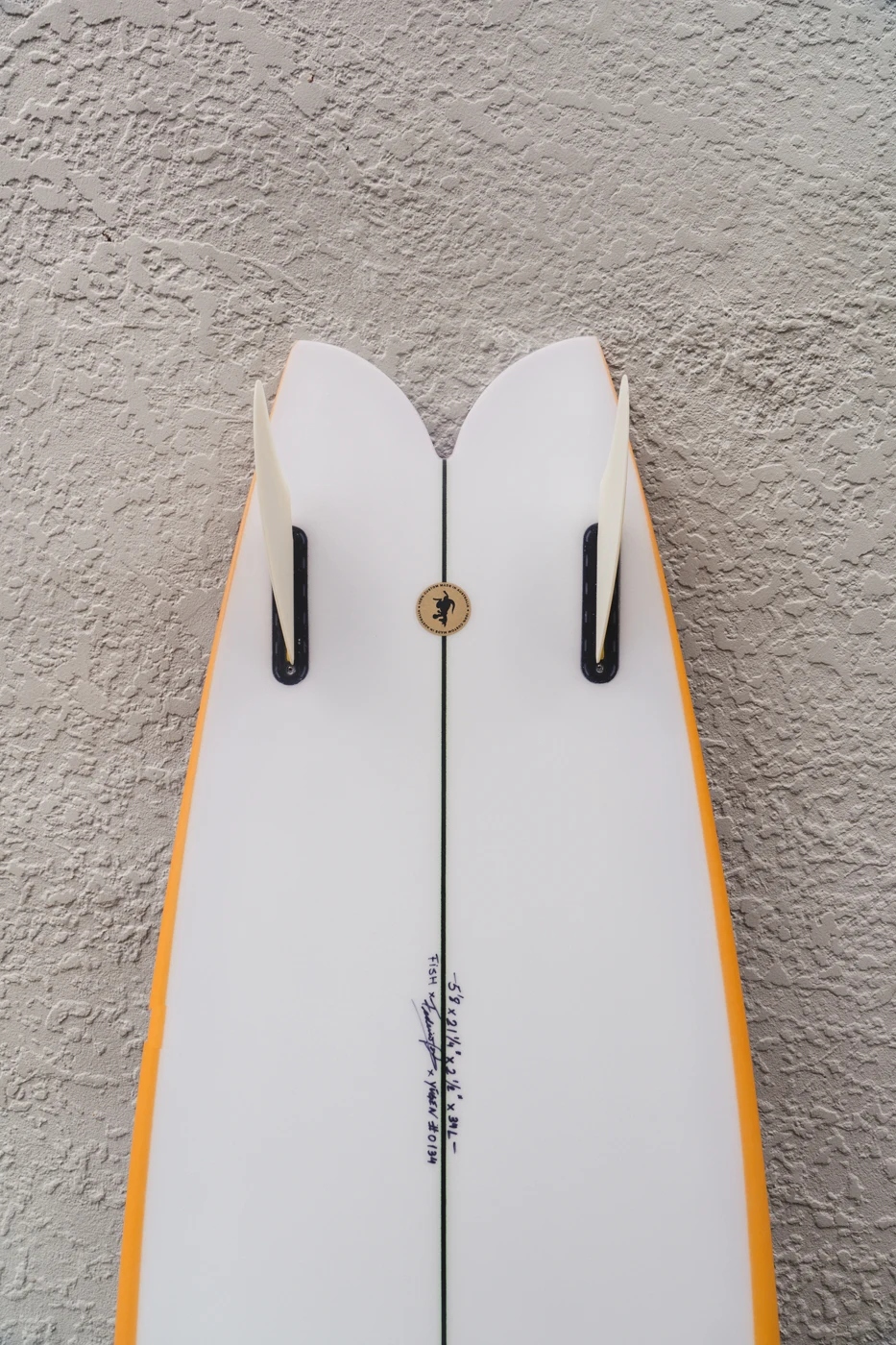
The outline narrows behind your back foot. That leaves less width to turn from than the middle of the board. The two tips of the swallow tail are part of how it holds a line and lets go as you redirect it. I look at the tail alongside the twin fins and the rest of the shape, because that’s what you’re actually surfing.
Look at the board from above and follow the outline from its widest point down to the tail. You can see where it narrows and where it splits. You’d need a side view to see the rocker, and a surf to know how the whole shape feels to you.
Choosing a size
When I’m choosing a size with someone, I start with how their current board paddles and turns, the waves they surf most and what they want to feel differently. Their weight, height and stance help me work out the dimensions. Volume matters for float and paddling. Two boards with the same litres can still feel different, depending on where that foam sits and how the width and curve are distributed.
If you can borrow a fish for a surf, try it in waves you know. Pick a few waves where your usual board tends to slow down and notice what changes on entry and through the flat section. That gives you something concrete to compare before you choose a size.
When I’d look at another shape
If you’re still working on catching waves consistently, a short fish may not give you the paddling room you want. If most of your surfing is in steeper pockets and you want to turn tight and vertical, I’d look at a shape for that job. The same applies if your current board already carries you through the soft bits: start with what you wish it did differently.
The question I’d take into your next surf is simple: where on the wave do you want more from your board? The answer will tell you more about whether a fish fits than the tail or volume on its own.
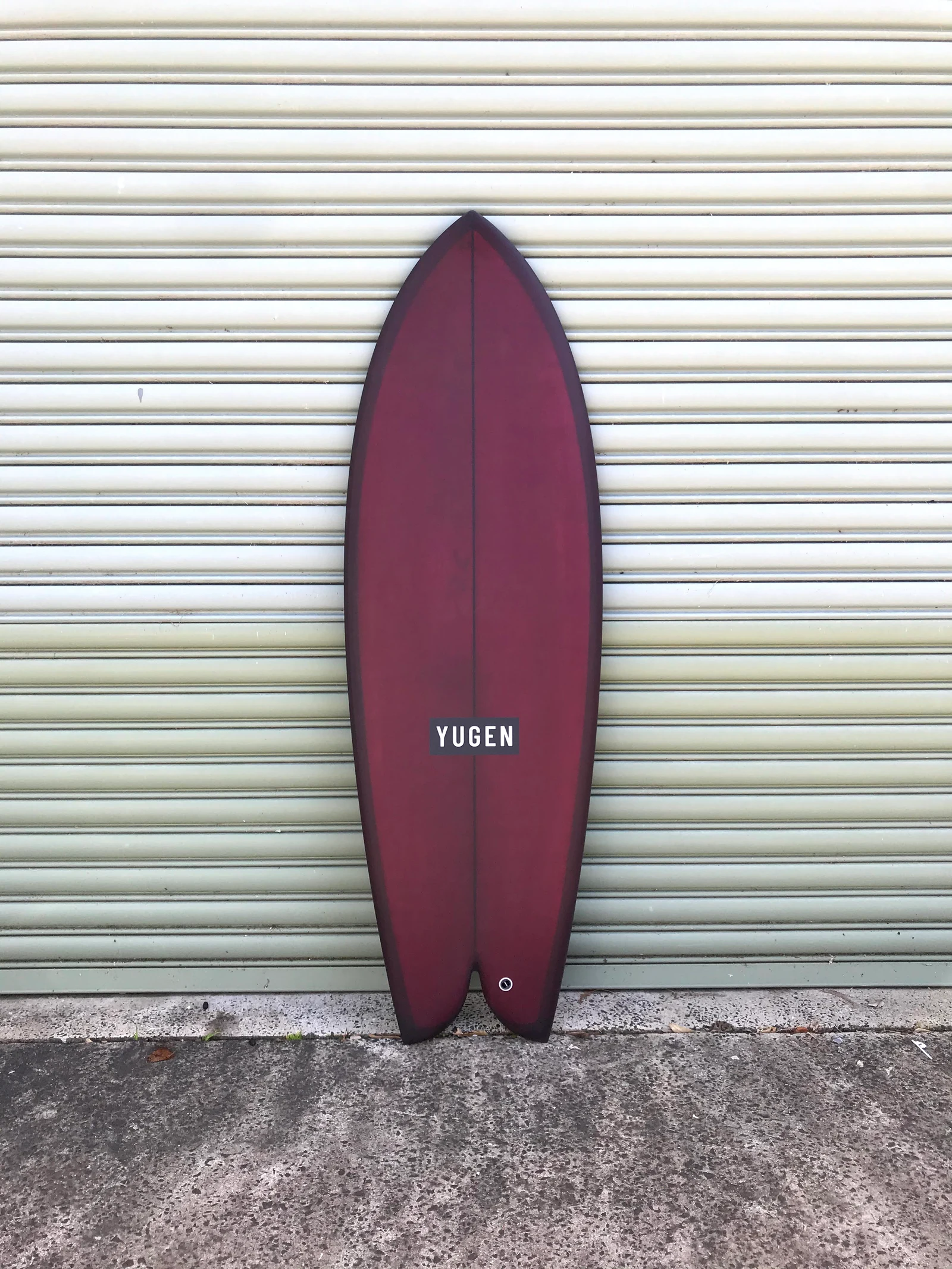
If that sounds like the board you’re after, see The Fish and its available sizes.