
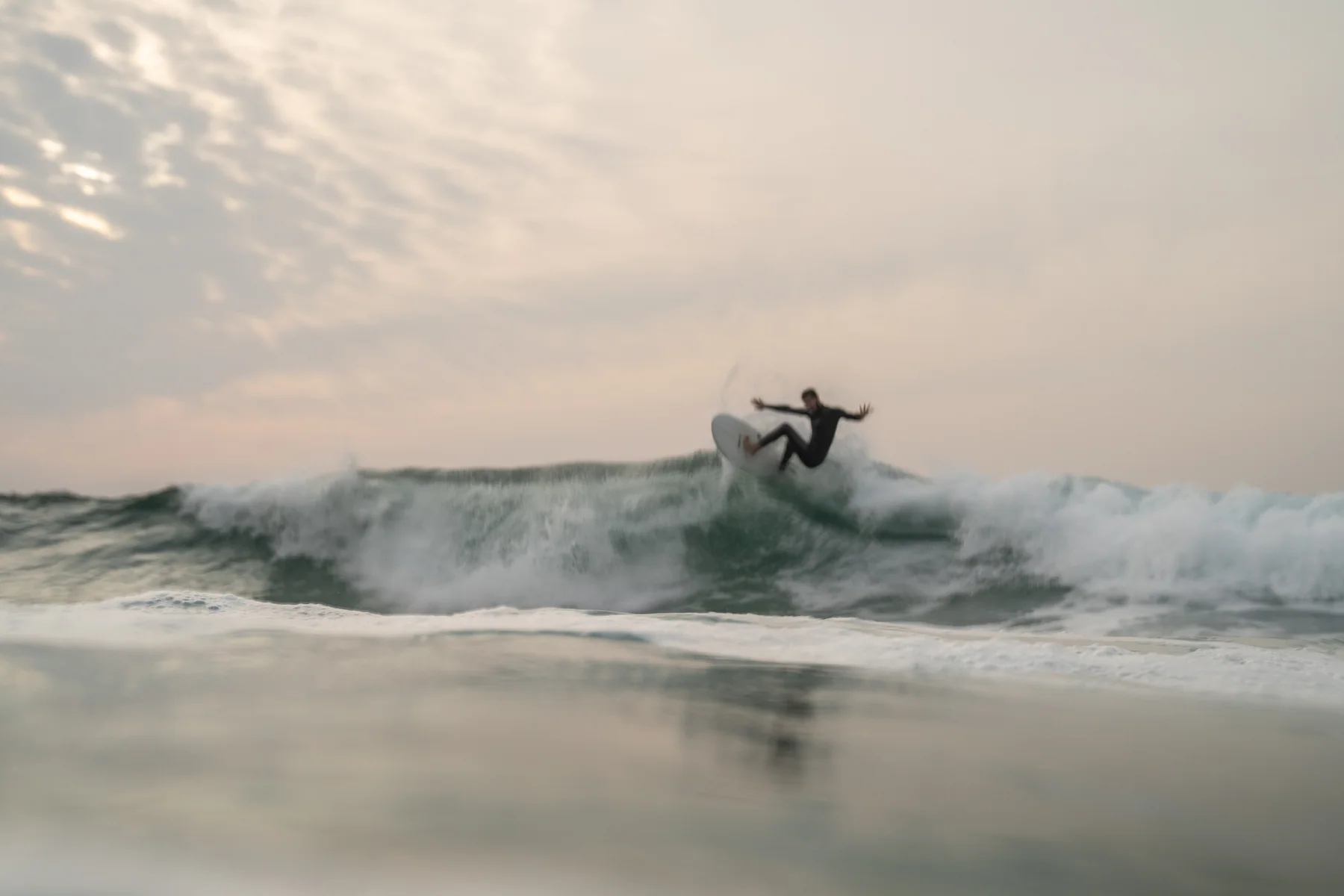
Sometimes.
Start with the feeling or move you want. Maybe you want to draw a longer arc through a turn. Maybe you want more speed as you come out of it. Which waves do you want to do that in?
A board can support the way you surf. It can also give you a new feeling to explore. But if you are still learning a turn, a new model may leave you with the same question in a different shape.
Can you make the move in those waves?
Try to be specific. Can you make that turn, even sometimes, in the waves where you want to use it? What happens on your current board and fins?
If the board responds in a fairly consistent way, look at your surfing too. Get footage from a few attempts in those conditions. You may spot a difference between the line you felt and the line you actually took. Your timing may be part of it. The board could still be tuned later; the footage gives us a better starting point.
Our bottom-turn guide shows one example of a movement that can be hard to feel from the inside. If the question is broader, the plateau guide looks at skills, waves and equipment together.
Does the board keep surprising you?
Now imagine you can make the move in those waves, but your board keeps bogging, stalling or feeling slow at the same point. That is worth investigating. Look at the footage as well as the board and fins. One difficult wave cannot tell us which part caused the feeling.
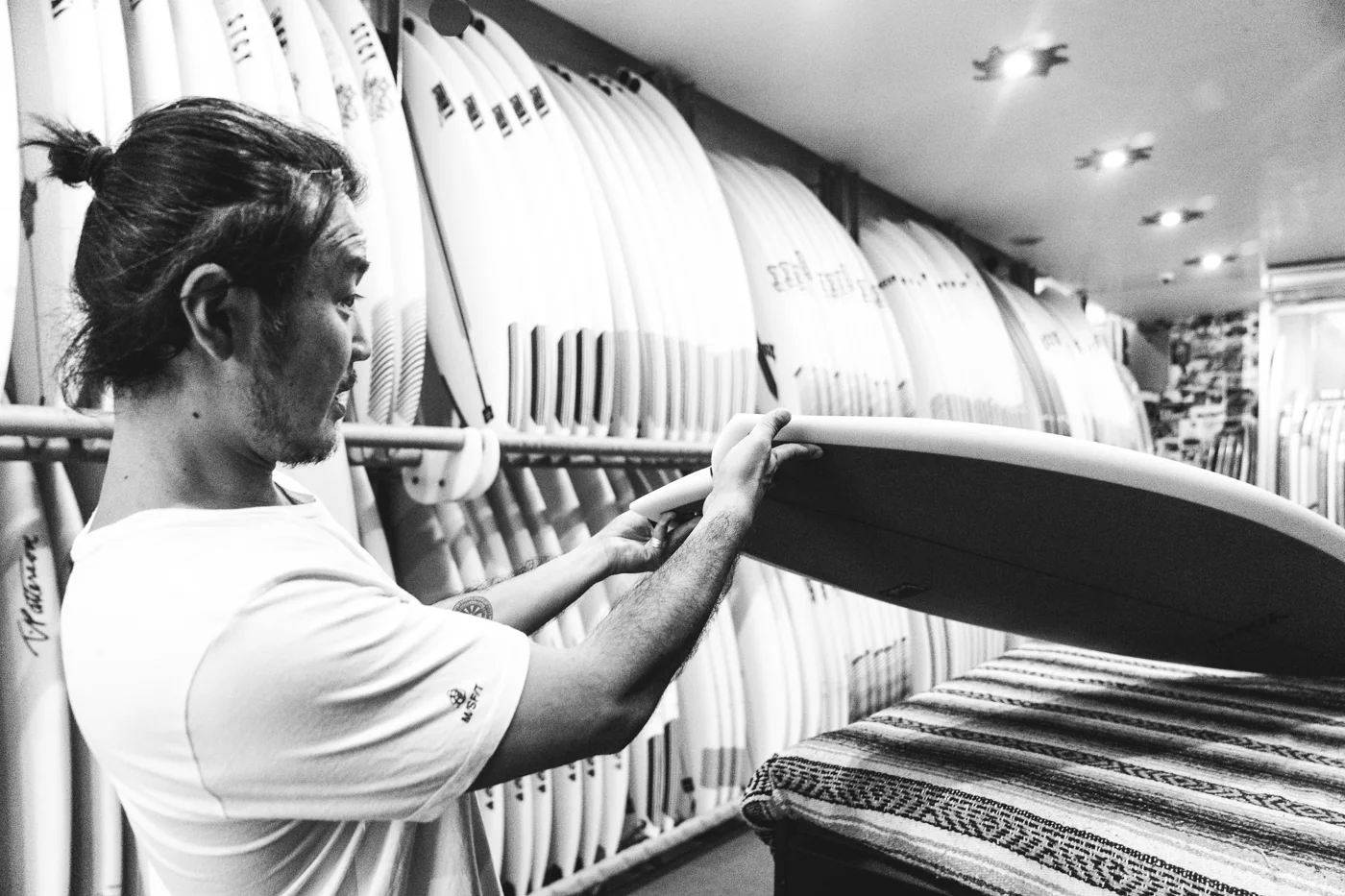
When I talk through this with a surfer, I want to know their usual waves, current board and fin setup. I also want to see the turn they are trying to make. Then we can ask what the board already does well and what might need to change.
Say the goal is a longer arc with quicker acceleration through a turn. Depending on the surfer, waves and current board, I might discuss tail rocker, concave or fin size. Those are options to examine together, not a recipe I can choose from a short description.
Keep trying boards
Trying other boards is a good way to learn what you like. A Fish or a twin-fin midlength might give you a feeling you enjoy. Give yourself time to learn how each board works.
I would be careful about expecting one big model change to fix every difficulty, especially while your turns are still developing. You could change the board and your approach at the same time, then struggle to tell what helped. An everyday board with simple features can still be a lot of fun when you work with the wave and keep building your surfing.
How to make this decision
Name the move and the feeling you want. Note the waves, your board and fins, and what happens when the turn works as well as when it does not. If you can find footage of the turn you’d like to perform, you have a better reference.
If your movement seems to be the main question, work on that. If the board keeps giving you an unpredictable response in the waves you want to surf, bring those observations to a Design Session. It is a 60-minute video call for AUD150, credited toward a board if you commission one. We can look at your current setup and discuss whether a design change would help.